No mechanical grind
Kits that skip grinding rely on acid etching or nothing at all. Without an open concrete profile, the coating is sitting on the slab instead of anchored into it.

Garage Floor Coatings
Mechanically prepared concrete, a defined layer system, and a floor that shrugs off hot tires, road salt, and Michigan winters.
See the potential
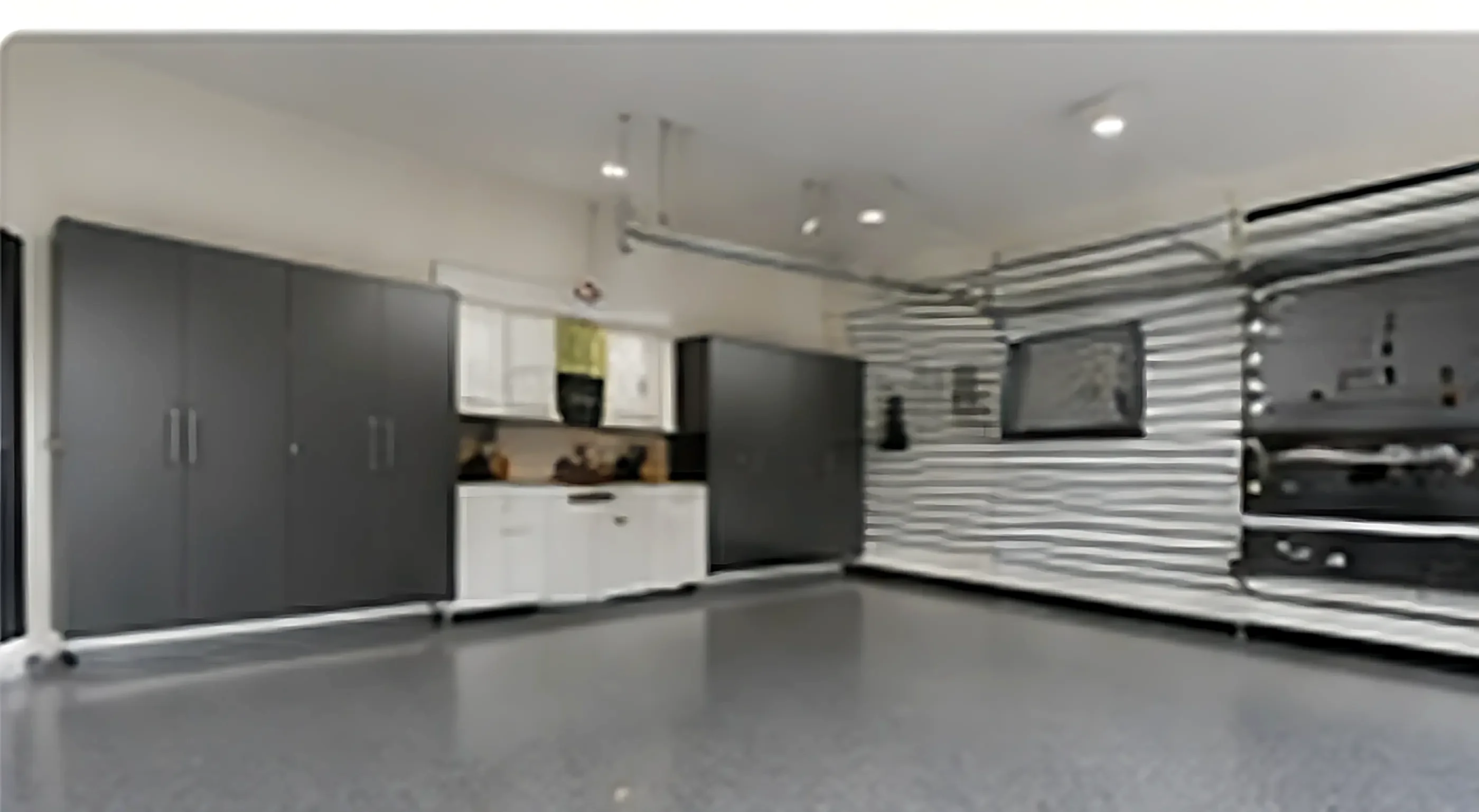
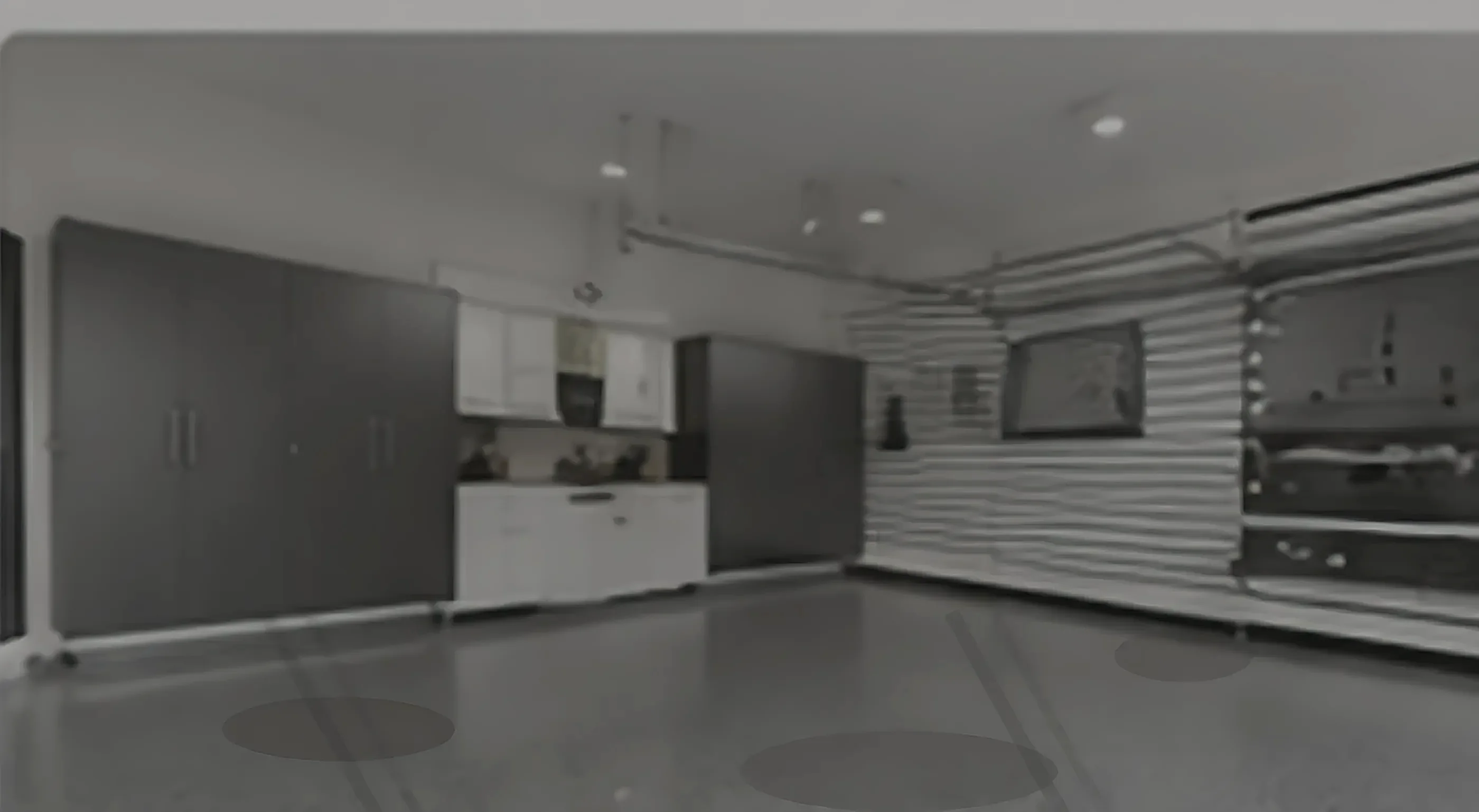
A matched conceptual rendering: same garage, same camera, coated floor.
The system
The concrete is ground to open the surface so the coating bonds. This is the step that decides whether a floor lasts.
Damage is repaired as scoped before any coating is applied, not hidden under it.
Base coat, decorative broadcast, and topcoat. Your proposal names the exact system, layer by layer.
Flake blends and texture levels selected with you before installation.
A sealed surface that stands up to snowmelt, road salt, oil, and shop use.
Your proposal includes when you can walk on the floor and when you can park on it.
Floor coatings are installed indoors, which makes them a natural project when exterior season ends.
Coated floors clean up with a hose, a squeegee, or a soft broom, even after a slush-season week.
Whether you searched epoxy, polyaspartic, or flake floor, your proposal names the actual system being installed.
Anatomy of the system
A coated floor is not paint on concrete. It is a layered system, and each layer has a job. Your proposal names every layer being installed, which is exactly the information a vague garage floor quote leaves out.
The failure points
Nearly every peeling garage floor fails the same three ways. None of them are visible on installation day, which is why the preparation, not the topcoat, is where a floor is really won.
Kits that skip grinding rely on acid etching or nothing at all. Without an open concrete profile, the coating is sitting on the slab instead of anchored into it.
Concrete breathes. Vapor pushing up through an unprepared slab will lift a coating from below, which is why slab condition is evaluated before any system is proposed.
A one-coat kit is a paint job pretending to be a floor system. Proper builds carry a pigmented base, a broadcast layer, and a sacrificial clear topcoat that takes the wear.
Coating over cracks and spalls just preserves them under clear armor. Damage is ground out and repaired first, so the finished floor is actually smooth.
Straight answers
A multi-layer resinous system applied over prepared concrete. It turns a stained, dusty slab into a sealed, cleanable floor that resists hot tires, road salt, and chemicals.
Epoxy is one family of coating products. Your proposal names the exact system being installed layer by layer, including the base, broadcast, and topcoat, so you know precisely what is going on your floor.
Mechanical preparation, grinding the surface to open the concrete so the coating bonds, plus repair of cracks and spalls as scoped. Preparation is what separates a floor that lasts from one that peels.
Return-to-service times depend on the system and conditions, and your proposal includes a clear timeline for walking on the floor and parking on it.
Texture options are part of the selection process. Broadcast media in the system adds grip, and the right level for your use is confirmed before installation.
Garage coatings are installed indoors, so they are a natural winter project. Your floor takes the worst of the season, snowmelt, salt, and grit, and a coated floor cleans up with a hose and squeegee.
They are different resin chemistries with different cure behavior and UV stability. What matters is that your proposal names the actual system, layer by layer, instead of hiding behind a generic word.
Usually, once the damage is repaired. Cracks and spalls are ground out and filled as part of the scoped preparation, so the finished floor is smooth instead of a coated version of the old problems.
Almost always at the surface: no mechanical grinding, moisture in the slab, and thin single-coat builds. The coating is only as good as what it is anchored to, which is why preparation leads every Saje floor.
Most residential garages install quickly, and cure milestones control the schedule more than labor does. Your proposal states the installation window and exactly when you can walk on and park on the floor.
Start with a walkthrough
Tell us what you are considering. We will schedule a walkthrough, clarify the scope, and put a detailed proposal in writing.